I just got back from a few days in the Kansai area and was happily enough able to do some retro game shopping (well, mostly retro-game window shopping) while I was down there!
Back when I lived in Fukuoka I used to do regular posts on here where I`d take my camera to local retro game shops and review them, but I haven`t been doing those since I moved last year. The main reason for that is my new city, compared to Fukuoka, is very short on decent Famicom shops. The few that I`ve been to have not been blog-worthy. So I was really excited to be able to go do some retro game shop touring in Kobe and Osaka. Today`s post will just be about Kobe!
Kobe is an awesome city if you`ve never been there. I actually lived in or near Kobe for my first five years in Japan, but that was before I got into retro gaming so I had never been to any of the shops there.
Kobe doesn`t really have a retro gaming district (neither does Fukuoka though), but I did stumble almost by accident into a little cluster of cute retro game/toy stores in an unusual place.
The main train station in Kobe is in Sannomiya. The JR tracks are elevated there and underneath there are a number of shoutengai (shopping alleys) that stretch for a couple of kilometres from Sannomiya to Motomachi and on to Kobe station. The photo at the top of this post is from one section of it. This is what it looks like inside:
Near Sannomiya most of the shops are actually high end clothing and other fashion stuff, but as you work your way over to and past Motomachi they start to become dominated by more ecclectic little shops selling used electronics and other stuff. Naturally some of them had retro game consoles, including some Famicoms:
Prices were not that great, about 5,000 yen or so for a Famicom. Not a rip off, but you can do better on Yahoo Auctions.
Just walking along the narrow alleyway was quite fun, there were a lot of Famicom bits and pieces peaking out of windows here and there:
This guy had a lot of stuff, mostly toys but also some retro game stuff:
Including some Famicom carts in his glass case. Again, prices were on the high side. Those copies of Super Mario Bros. were 1500 yen each.
So if you are in Kobe definitely give the alleyways under the JR tracks between Sannomiya, Motomachi and Kobe stations a try. Even if you don`t buy anything you`ll probably have a lot of fun browsing and exploring down there. There are probably some other good retro game hunting grounds in the city, but I only had a day to look around. In my next post I`ll show you retro game hunting in the bigger city of Osaka!
I just realized that today is the 30th birthday of the Famicom. Sadly I don`t have time to do a long post, but I couldn`t let the occasion pass completely unobserved.
I remember my own 30th birthday. That is a tough one to cope with, officially bringing your 20s to a close and along with it all semblance of still being `young`. Sigh.
Anyway, at least it will finally be able to appreciate that show Thirty Something.
On a related note, perhaps this could be the Famicom`s birthday cake. It isn`t my creation, I found it on Flickr here by somebody who is an awesome cake maker.
Barely a week into June and this is already my second post this month, I seem to be getting back into blogging!
I picked up something totally awesome on Yahoo Auctions the other day and I wanted to do a little post about it because when I did some searching on Google I discovered that there is nothing out there on the internet about them (in Japanese or English).
It is a full box of Amada LSI Game Mini Cards, produced in 1980 and still completely sealed with all the cards still in their original packs. Each of the cards features a hand-held game made by either Tomy, Epock, Takatoku Toys or Takara, whose names are on the front of the box:
Being released in 1980 they would have just missed the Game and Watch generation, but these ones are pretty cool. I have some Tomy handhelds from the early 80s, including my beloved Puck Man, and they are really cool. Inside the box the awesomeness begins with a bunch of cellophane-wrapped beauties:
In addition to the cellophane wrapped ones, which came in packs of 2 or 4, are the single packs with one each:
Each box contained a total of 60, which originally retailed for 10 yen each:
The company that made these, Amada, is kind of an important (and massively underappreciated) one in the history of Famicom stuff as pretty much all of the Famicom ephemera produced in the 1980s was put out by them. My favorite among these (at least in my collection) would be the Famicom Mini Cards that they released in 1986 which came in an identically sized box as my new LSI game cards. They display nicely together on my little shelf:
In fact, I was actually searching for some of those Amada Famicom cards on Yahoo Auctions when I came across these ones, which I hadn`t known existed before. Amada also put out the awesome Famicom Erasers and a cool but extremely hard to find set of Famicom stickers which I hope to do a post about in the near future.
Sadly I don`t have any information on how big the set of cards was or which games (other than the ones I can see on mine) were featured. I am guessing that these were not a big seller back in the day. It is common to find little piles of loose Amada Famicom cards on Yahoo Auctions and there is a bit of a collector base for those here. These LSI game ones I have never seen before though and I couldn`t find any others, loose or in their boxes, on Yahoo Auctions. The one I got was probably dead stock from some store that couldn`t sell them.
Anyway, this type of thing I find just as interesting as collecting games themselves. They look really cool, especially these ones still in the original packing (the cards by themselves are a bit dull in design).
In the summer of 2011 something happened in
Japan that made life a bit more difficult for retro gamers.One day all the television broadcasts
switched from analogue to digital.For
years prior to that the government had been running regular commercials on TV
reminding people about the coming analogue apocalypse.I remember those commercials in particular
because they featured a member of the popular boy band SMAP who, right in the
middle of the campaign, got caught up in a minor scandal when he got drunk one
night, went to a park somewhere in Tokyo, got completely naked and then danced
and shouted until somebody called the police.
They dropped him from the TV commercials
for a couple of months amid the public outcry over that, but I think they hired
him back once the news cycle had moved on and it was deemed that he had
apologized enough.The incident is
mainly noteworthy for the fact that it was the only time in history that a
member of a boy band has ever done anything that had entertainment value, which is
why I mention it here.
Anyway, that is a bit off topic.The main effect of the switch to digital was
that it instantly rendered all analogue TVs completely useless as TVs.Both of the TVs I had at the time were
analogue so I had to go spend 5,000 yen to buy a tuner to make a TV that no
longer had any resale value capable of showing the quality programming that Japanese TV
networks are known for, like this:
When we moved last year I made the massive
mistake of ditching our two analogue TVs as we intended to buy a new digital
one and figured they weren`t worth shipping.It was a mistake because, as I only recently discovered, digital TVs
come with this awesome design feature known as `RF incompatibility` that allows
you to not hook anything up to the TV via RF.It’s a totally awesome improvement on the old TVs that didn`t have RF
incompatibility, meaning that if you wanted a TV that was totally useless and
didn`t work at all with RF then you were shit out of luck.
So anyway, having an RF incompatible TV
(and a 1989 Sony Trinitron that I had to buy online specifically for retro
gaming purposes) has made me acutely aware of the RF/ AV divide in retro video
game consoles, something that I never really paid much attention to
before.It has, for the first time in
the history of my collection, caused an ugly social rift to appear within the
ranks of my consoles.
On the one hand is my AV Famicom, Super
Famicom, Nintendo 64, Sega Mega Drive and PC Engine, all of which have AV cables
and can be connected to the big digital TV in my living room.They sit in a nice piece of IKEA furniture
(at least the Famicom and N64 do, space limitations apply) along with some
potted plants, family photos and a few tastefully arranged knick knacks.We see them everyday as the living room is
the apartment`s centre of activity.Sometimes we play nice music for them.They have a view out the 6th floor terrace window from which
you get a nice view of the city lights at night.
In other words, they have a pampered
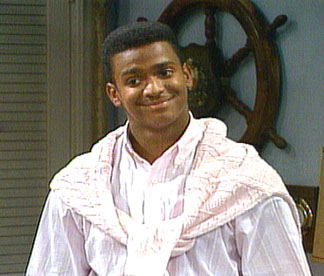
existence. They are the Carlton Banks of my retro game console collection.
On the other hand are my poor RF-only
consoles, which actually make up the bulk of my collection.My old-school Famicom, Epoch Cassette Vision,
Intellivision, Atari 2800, Sega SG-1000, Mark III, Space Vader and Color TV
Game 15 are all relegated to the dreaded `spare room` which is mainly used for
storage and as the only part of our apartment where we allow the dog to pee and
poo on the floor without getting scolded.The Sony Trinitron is set up in there, but there is no IKEA furniture to
support it. Rather it just sits on a
moving box surrounded by doggy pee sheets.The only place to set a console is directly on top of the TV, so only
one console can be used at a time, with the rest just sitting in boxes in the
closet.It is not a comfortable room so
they hardly get played at all.
Compared to the systems that work with
digital, they have a rough life. They are the Ron Burgundy-after-getting-fired-from-the-News-Team of my retro console collection:
I think this is probably a common pattern
among the households of retro game collectors across Japan since 2011.We are probably the only people out there who
will actually still pay money for analogue TVs, but owing to the small size of
most Japanese homes it is a huge burden to have to maintain two separate TVs
(and the attendant seating arrangements, etc) just to play games on old
systems.Until I got that damn digital
TV this had never been a problem for me because all of my games worked on our
main TV in the living room.
Now, my collection is divided.And the part of it I like the best, the
really REALLY retro stuff, I can`t even play in my own living room.Damn you, digital broadcasting, this is all
your fault.And also damn you, guy from SMAP whose name I can`t remember, its
probably your fault too just because you are a member of a boy band.
I made a pretty nice pic up on Yahoo Auctions last week: my very own Atari 2800!!!
That is correct, Atari 2800 and not Atari 2600.
The Atari 2800 was Atari`s abortive attempt to export a version of the 2600 to Japan. They were a bit late to the game with it though, releasing it in 1983 just as the Famicom was about to hit. That meant it was a total failure in a commercial sense and they only sold a handful of them.
That, in turn, means that these consoles are extremely hard to find today. Until this one arrived in the mail in all of my years of combing retro game shops I had never seen one with my own eyes before. I think they are about as close as you can get to a holy grail of retro Japanese consoles (sadly this fact was reflected in the price I paid for it, but I think it was worth it).
When I got it in the mail a few days ago I was so psyched, but I was in for one big shock when I tried to plug it in. This is probably old news to most people, but I hadn`t realized that new flat screen TVs don`t take RF input. During all my years in Fukuoka collecting retro games both of the TVs in our house were old-school analogue ones so it never came up.
When we moved we got rid of those and I bought a brand new flat screen. I had been using my AV Famicom to play games up until now so I hadn`t noticed that it didn`t take RF until the Atari 2800 just wouldn`t work on it.
So I went back onto Yahoo Auctions, found an awesome 1989 Sony Trinitron 14 inch TV for about ten bucks and picked that up. Today it arrived:
I had a hell of a time trying to get it to work, but eventually I did. The console came with four games (Space Invaders, Night Driver, Baseball and Missile Command) so I decided Space Invaders would make a good game to break it in on.
I don`t have any furniture to keep the TV on (it is in our spare bedroom now) so it is just sitting on a box for the time being, which is actually kind of a cool way to set up a mini retro-console station. I love how hard it is to play, I have to fiddle with the RF switch for ages just to get a reasonably clear picture and then when I play the game I am never sure when the slightest move will cause the screen to go completely blank.
Oh and bonus thumbs up to old-school TVs for having the ability to have game consoles placed on top of them, thus saving space. That is one cool thing future gamers will miss out on with these damn flat screens.
True old school. This is how retro games are meant to be played. Old system on an old TV that barely works. Should keep me busy for a while!
As I mentioned in a recent post, I moved about 6 months ago. One of the sacrifices we had to make while packing up was my beloved Famicom shelf system. Painstakingly constructed from 100 yen shop dishracks it was a bit too bulky to justify taking with us, so it went out with a truckload of other stuff to the myriad of Fukuoka second hand shops that take stuff off people`s hands when they move. The North American tradition of the garage sale does not exist in a country where most people don`t have garages. Sadly a Super Famicom and a big pile of Famicom carts (pretty much all baseball and Mahjongs) went wtih it.
Until this week my Famicom carts at the new place were relegated to storage in a box and were completely undisplayed. That continued until the other day when, in a scene reminiscent of my visit to the 100 yen shop in Fukuoka a couple years ago when I stumbled across those dish racks, I stumbled across a pile of these:
Postcard racks!
I picked up a whole bunch of them (the great thing about 100 yen shops: you can buy tons of stuff on a whim and it won`t break you). I then put them on the wall and presto, a new Famicom cart storage system is born:
Compared to my old dish rack system these have one advantage and two drawbacks. The advantage is that these do a much better job of displaying cover art of each game, which you couldn`t see very well with the dish rack system. Since Famicom carts generally have awesome cover art that is a big plus.
The first drawback is that these can`t hold as many games as the dish racks. One of these can hold 4 Famicom carts whereas one dish rack could hold 8. The other drawback is that these aren`t quite as stable as the dish racks. In two years the dish racks never dropped a Famicom cart. With these, the carts are a bit more precariously positioned so when the next earthquake comes along (they do happen pretty often here) these are all going to be on the floor.
Still, I really like the way this ties a corner of the room together. If you are in Japan and are interested, these racks aren`t available at the Daiso (the main 100 yen shop chain in Japan) but only at Seria. Also, they have two kinds of these postcard holders, the metal ones I bought and some wood ones (you can see two of them in the photo on the left, just below the Famicom carts holding some baseball cards). I recommend using the wood ones rather than the metal, they are a bit wider and will fit Famicom carts a bit better (I`m probably going to switch over to those next time I hit Seria).
As the part of the title that precedes the colon states, I`m back. Well, I never left really, I have just been too busy. Today I am home sick from work (just a cold, nothing to worry about) and for the first time in 2013 I find myself with a few spare moments to devote to my beloved blog.
Ah how I have missed it. I thought I would do a post on one of my sub-collections - the small box early Nintendo carts CIB.
This is a very difficult to name series because it doesn`t quite correspond to the pulse line carts - Hogan`s Alley for example doesn`t have a pulse line version of the cart but has one of these boxes while Devil World, which does have a pulse line cart, was only sold in the larger silver boxes so far as I know. So tempted though I am, I can`t just refer to it as a CIB set of the pulse line carts even though that is almost what they are. That means, you know, just look at the pictures to figure out which CIB games I am talking about here.
These, along with the early Namco boxes of similar size, are my favorite Famicom games in terms of boxes. They just have the right balance of size, color and evocative-yet-simple artwork on the cover to lure me in. If I had been a kid in 1983 and been confronted with a sales display full of these I definitely would have bugged my parents for them until they became so massively fed up that they just bought me one to shut me up.
Come to think of it I was a kid in 1983. Lucky for my parents that they never took me to Japan.
Anyway, I only have 10 of these which means I am still a few short of a set. That includes some of the nicer ones like Mario Bros and Donkey Kong Jr. Math. Fortunately none of them are expensive so hopefully I`ll track them down at some point. Sadly that will probably have to be on Yahoo Auctions or somewhere similar as I don`t get out to the shops anymore like I used to.
Anyway, I think the Donkey Kong one is probably my favorite of the ones I do have. It is a very cool piece of pop art. I think once I finish the set my next project will be to try and devise some way of properly displaying them all as my current method (putting them in a box stored under the bed) just isn`t doing them justice at all.